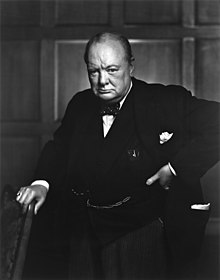
RT. HON. SIR WINSTON SPENCER CHURCHILL
ANNE FRANK
ROUND TABLE OF NEBRASKA
The Bookworm 2501 S. 90th St
Omaha Nebraska, 68124
Omaha Chapter of the International Churchill Society
https://churchillsocietyomaha.org/
October 25th
Sunday 1:30 pm at the Bookworm

http://wrldhstry.com/WinstonChurchill_AnneFrank_Online_Resources.htm
Martin Gilbert’s
Winston S. Churchill Volume 6 Finest Hour 1939-1941
Chapter 27 “Fight on!” (1983, pages 556-563)
Andrew Roberts’
Churchill Walking With Destiny
Chapter 21 ‘The Fall of France: May-June 1940 (2018, pages 559-560)
Hannah Pick-Goslar’s
My Friend Anne Frank Chapter 18 ‘The Promised Land’ <end of book> (2023, pages 275-313)
Event Coming Up
Wednesday, November 18 6pm
Annual Churchill Birthday Gala
https://churchillsocietyomaha.org/events
London
June 16th 1940
Winston beginning a speech in the Cabinet Room and finishing it in some other room
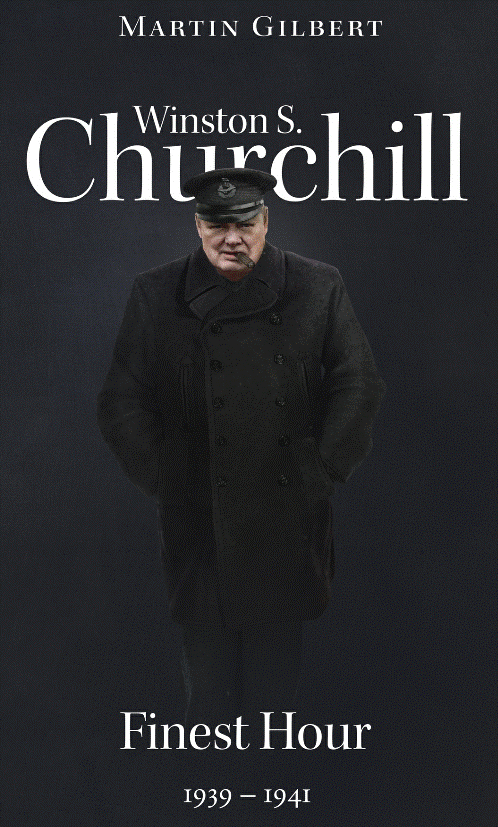
Excerpt from Martin Gilbert’s Winston S. Churchill Volume 6 Finest Hour 1939-1941
(1983, page 560)
Churchill now returned once more to the Cabinet room, this time together with de Gaulle, as the final touches to the Declaration of Union were hammered out. The meeting, as Colville noted in his diary, ‘turned into a sort of promenade’, with, as he described the ensuing scene:
…Winston beginning a speech in the Cabinet Room and finishing it in some other room; and everybody has been slapping de Gaulle on the back and telling him he shall be Commander in Chief (Winston muttering: ‘Je l’arrangerai’).
Is he to be a new Napoleon? From what I hear, it seems that a lot of people think so. He treats Reynaud (whom he called ‘ce poisson gelé’ at one point) like dirt and discourses familiarly on what he will do in France: yet he is only a major-general just recently discovered.
Meanwhile the King does not know what is being done to his Empire. The Lord President2
is going to see him and will break the news. We may yet see the Fleur de Lys restored to the Royal Standard…3
2Neville Chamberlain.
John Colville, Footprints in Time, London 1976, pages 88–9.
Gilbert, Martin. Winston S. Churchill: Finest Hour, 1939–1941 (Volume VI) (Churchill Biography Book 6) . RosettaBooks. Kindle Edition.
Jerusalem
November 30 1947
When I paused to look through the glass window of a bookshop, might the glass suddenly shatter if a bomb were to go off nearby?
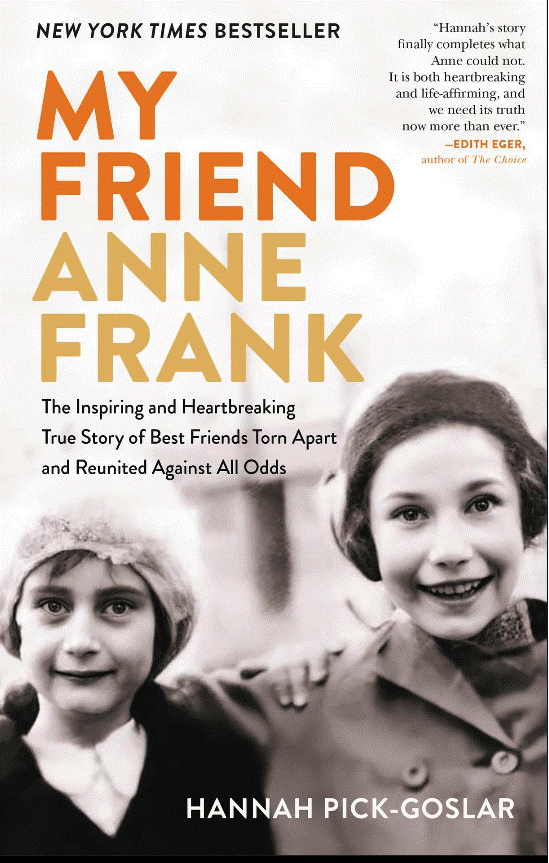
Excerpt from Hannah Pick-Goslar’s
My Friend Anne Frank (2023, Pages 281-282)
Soon, the sounds of shelling seemed incessant and I felt constantly on edge. Was the quiet, sunny street I was walking along to work safe that morning, or was a sniper lurking on some rooftop? Was I walking towards danger or away from it? When I paused to look through the glass window of a bookshop, might the glass suddenly shatter if a bomb were to go off nearby? However, while I did feel fear and anxiety, it was muted in some way because I was on my own; if I was hurt, only I would be hurt. In the past, I’d worried constantly about Gabi. In later years, I would have a family of my own to concern myself with. But for now, it was just me. Just my safety to think about. However, I knew it would be stressful for my aunt and uncle to hear about the situation from afar, so I tried to write reassuring letters back to Switzerland, until the postal
and telegraph services were halted.
Miscellaneous
Link to Article